
Our Paper Explores a Less Invasive Way to Treat Blocked Veins in Post-Thrombotic Syndrome
If you’ve had a deep vein thrombosis, also called a DVT, you may have been told the clot is “treated” once you start blood thinners.
But for some people, the story does not end there.
Months or years after a DVT, the leg can still feel swollen, heavy, painful, itchy, or tired. Skin can darken. Varicose veins may appear. In more severe cases, sores can form near the ankle.
This condition is called post-thrombotic syndrome, or PTS.
The good news? Doctors are developing new ways to treat blocked veins from old clots. One promising option is a minimally invasive procedure that removes chronic blockage from inside the vein without a large surgery.
Let’s break it down.
What Is Post-Thrombotic Syndrome?
Post-thrombotic syndrome is a long-term problem that can happen after a DVT.
A DVT is a blood clot in a deep vein, usually in the leg or pelvis. Even after the clot is no longer fresh, it can leave behind scarring inside the vein. This scar tissue can block blood flow or damage the tiny valves that help blood move back to the heart.
When blood has trouble getting out of the leg, pressure builds up. That pressure can cause:
- Leg swelling
- Heaviness or aching
- Pain with standing or walking
- Skin darkening or thickening
- Itching or cramping
- Varicose veins
- Slow-healing wounds or ulcers
In other words, the clot may be old, but the symptoms can be very real.
Why Can Post-Thrombotic Syndrome Be So Frustrating?
PTS can be tricky because it often affects everyday life.
A short walk may feel like a marathon. Standing in line may become uncomfortable. Shoes may feel tight by the end of the day. Some patients feel embarrassed by swelling, skin changes, or visible veins.
Traditional care often includes:
- Compression stockings
- Leg elevation
- Exercise
- Skin care
- Blood thinners when needed
- Pain control
These steps can help many people. But if the vein is badly blocked, symptoms may continue because the “traffic jam” in the vein is still there.
That’s where newer vein procedures come in.
A New Tool for Old Vein Blockages
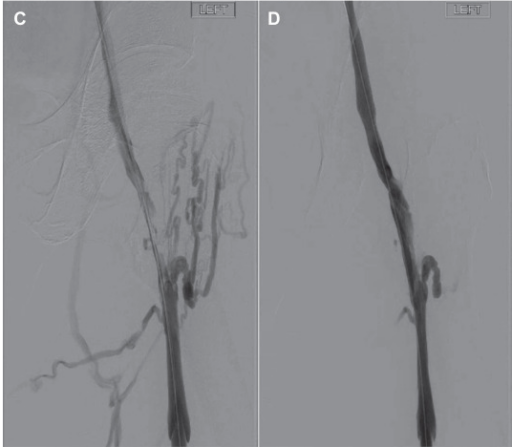
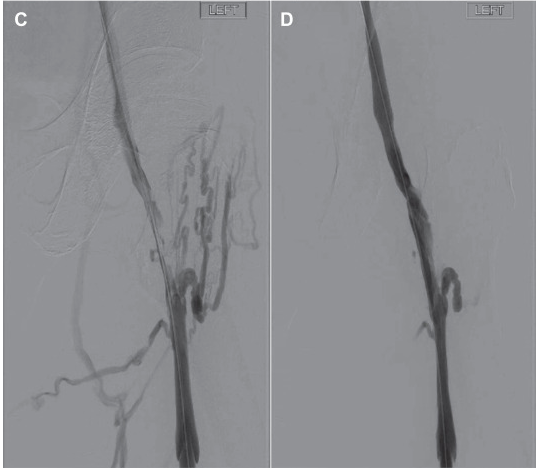
We recently published a paper that describes our early experience with a device called the VenaCore thrombectomy catheter, developed by Inari Medical. It is designed to help treat chronic venous occlusions, meaning older, tougher blockages inside veins. Our work describes promising early technical performance, including improved vein opening and symptom relief.
Think of it like this:
Your vein is supposed to be a highway for blood. After a DVT, scar tissue and old clot can narrow or block that highway. A thrombectomy catheter is a small tool that travels inside the blood vessel to help clear the blockage and reopen the path.
The goal is simple:
Better blood flow out of the leg. Less pressure. Fewer symptoms.
Who Might Benefit From This Type of Treatment?
This kind of treatment may be considered for patients with more severe symptoms from chronic vein blockage, especially when symptoms affect quality of life.
Possible signs include:
- One leg is much more swollen than the other
- Leg heaviness makes walking hard
- Pain gets worse with standing
- Skin changes are developing near the ankle
- A venous ulcer is present or keeps coming back
- Imaging shows a major vein blockage in the pelvis or thigh
This is not usually a treatment for mild symptoms. It is also not a replacement for a full medical assessment.
The key question is:
Are the symptoms coming from a blocked vein that can be safely reopened?
What Should Patients Ask Their Doctor?
If you have symptoms of post-thrombotic syndrome, consider asking:
- Could my symptoms be from an old DVT?
- Do I have a blockage in the pelvic or thigh veins?
- Would an ultrasound, CT venogram, MR venogram, or venogram with IVUS help?
- Am I a candidate for minimally invasive vein treatment?
- Would I need a stent, thrombectomy, or both?
- What are the risks and benefits in my case?
A vein specialist can help sort out whether your symptoms are from vein blockage, valve damage, lymphedema, heart or kidney issues, or another cause.
The Big Takeaway
Post-thrombotic syndrome can be exhausting, uncomfortable, and discouraging. But patients should know that treatment options are improving.
New minimally invasive tools may help doctors reopen blocked veins caused by old clots. For the right patient, this may improve blood flow and reduce symptoms like swelling, heaviness, and pain.
The most important step is getting the right diagnosis.
If you’ve had a DVT and your leg still does not feel right, it may be worth asking whether post-thrombotic syndrome treatment could help.
Disclosure: I receive consulting fees for helping Inari Medical, the company that makes the VenaCore thrombectomy catheter, design new products.