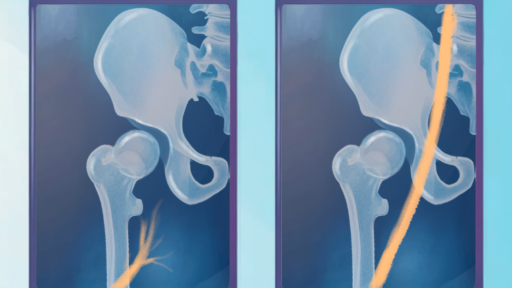


If you have an iliac vein stent, or you’re deciding whether to get one, you probably want a straight answer to a simple question: how long will it last? And close behind it, a more worrying one: how would I know if something went wrong?
Here are the short answers. An iliac vein stent is designed to be permanent. It has no expiry date, no moving parts, and it does not wear out on a schedule. Most stay open for the long term. When a stent does develop a problem, it is rarely because the metal has worn out (more often, clot or tissue narrows the channel through it). That usually brings back symptoms you already recognize, and many of these problems can be treated with another minimally invasive procedure rather than surgery.
This post covers how long stents actually stay open, what can go wrong, the warning signs, how stents are monitored, and what can be done if a problem is found. I place these stents regularly, and this is the conversation I have with my own patients.
How long do iliac vein stents last?
An iliac vein stent is a lifelong implant. After placement, tissue gradually grows over it and incorporates it into the vein wall. It is not taken out or replaced after a set number of years.
So the more useful question is not “how long does the stent last?” but “what are the chances the vein stays open?” And that depends on why the stent was needed in the first place.
If the stent was placed for compression without a previous blood clot (sometimes called May-Thurner syndrome) the track record is excellent. A 2026 analysis pooling 37 studies and nearly 6,800 patients found that about 97 out of every 100 of these stents remained open without any further procedure in studies following patients beyond two years. [1] Modern purpose-built venous stents show the same pattern. TIn the Abre study, 97.1% of stents placed for non-thrombotic compression were still open at three years, and other current stent trials report similar results. [2–4]
If the stent was placed because of previous blood clots (post-thrombotic disease) the situation is different. A clot can permanently scar the veins above and below the stent, so the stent is working in a more damaged circulation. These stents still help many patients, but they have a greater chance of narrowing or blocking. In the same pooled analysis, about 70% of post-thrombotic stents stayed open long term without another procedure. [1] Modern three-year studies report post-thrombotic primary patency ranging from roughly 64% to the mid-80s, depending on the patients and the study. [2–5]
That 70% figure needs explaining, because it does not mean 30% of stents are permanently lost.
Two ways of measuring “open”
Researchers track stent outcomes in more than one way. Primary patency means the stent has stayed open without needing another procedure. Secondary patency means the stent is open now, even if a procedure was needed along the way to reopen it.
The difference matters. Across the pooled studies, long-term primary patency for chronic iliac vein obstruction overall was about 75% but long-term secondary patency was about 91%. [1] In other words, needing a touch-up and permanently losing the stent are not the same thing. This is especially relevant for post-thrombotic patients. Their stents are more likely to need attention over the years, but most that develop a problem can still be reopened and kept working.
What about 10, 20, or 30 years?
Here we have to be honest about the limits of the data. Today’s dedicated venous stents have good study results out to about three to five years, and older-generation stents have shown that venous stents can stay functional for many years. But no one has 20- or 30-year follow-up on current devices, simply because they have not existed that long.
So if a patient asks what their stent will look like in 25 years, I cannot give a proven number. What I can say is that the stent is designed to remain permanently, modern stents have performed well over the years we can measure, and the longer experience with earlier stents gives good reason to expect that most will keep working for a very long time.
What can go wrong
Two main things can reduce blood flow through a stent, and they behave differently.
Gradual narrowing (in-stent restenosis). Over time, tissue can build up inside or around the stent and shrink the channel. This is usually slow, and symptoms creep back rather than appearing overnight. A leg that had improved starts swelling again by evening, or the familiar heaviness returns.
A blood clot in the stent (stent thrombosis). This can happen more quickly, and symptoms change more abruptly. The risk is higher in people who had extensive clots before the stent, and it also depends on how well blood flows into and out of the stented segment.
What about the stent itself breaking or moving? Problems with the metal are much less common than problems with flow through it. Modern venous stents have shown very low rates of fracture and migration, and several three-year studies reported none at all. [2–4] But “very uncommon” is more accurate than “impossible”. A small number of fractures were identified in the longer-term VIRTUS study, mostly where the stent extended into the common femoral vein, and they were not clearly linked to worse outcomes. [5] For most patients, a stent problem means clot, tissue narrowing, or poor inflow or outflow. Not a worn-out device.
Signs your stent may not be working
The most useful warning sign is the symptoms the stent originally improved start coming back. You are your best doctor, because you know what those symptoms felt like before treatment.
Contact your care team if you notice leg swelling that had improved gradually returning or the old heaviness, aching, and pressure coming back (especially later in the day). Perhaps pelvic pain or pressure have returned after it had settled. Or maybe, new varicose veins appearing or old ones filling up again. These do not necessarily mean the stent has blocked, leg swelling and pain have many causes, but they are a good reason to be checked.
Seek urgent medical attention for a leg that suddenly becomes significantly more swollen, painful, or discoloured, which can signal a new clot. Or sudden chest pain or unexplained shortness of breath, which can be signs of a pulmonary embolism and need emergency assessment.
It’s also worth saying what doesn’t usually mean trouble. You cannot feel an iliac vein stent from the outside, and an occasional ache, twinge, or bad day does not mean it is closing. What matters is a pattern. Symptoms that clearly improved after treatment now consistently returning. A persistent change is far more informative than one uncomfortable day.
How stents are monitored
Some narrowing can be found on imaging before you notice a difference, which is one reason follow-up matters even when you feel well. The usual test is duplex ultrasound which shows blood flow through and around the stent. CT or MRI is occasionally useful.
The schedule varies with why the stent was placed, how complex the procedure was, and your team’s practice. Many patients have a scan fairly soon after treatment and then periodically afterward. No single surveillance schedule has been proven best for everyone, but expert consensus recommends continued clinical and imaging follow-up after venous stenting. [6] And regardless of the routine, if your symptoms clearly change, you do not need to wait for the next planned appointment.
What about blood thinners?
If you were prescribed a blood thinner or antiplatelet medication after your stent, take it exactly as directed and do not stop without discussing it with your treating team. Beyond that, there is no single answer, because the right medication depends heavily on why the stent was placed.
For patients with no history of clots, a 2024 expert consensus on non-thrombotic iliac vein compression found no agreement that everyone needs anticoagulation or antiplatelet therapy after stenting; treatment should be individualized to the person’s clotting risk. [6] For post-thrombotic patients, anticoagulation is much more commonly used. A 2025 randomized trial (ARIVA) in patients with post-thrombotic syndrome found six-month stent patency above 90% whether they received rivaroxaban alone or rivaroxaban plus aspirin, with no clear added benefit from the aspirin. [7] The best strategy is still being worked out.
The key message is: take what your team prescribed, and if side effects, bleeding, cost, or doubts about whether you still need it come up, contact them before stopping.
If a problem is found
Many stent problems can be treated without open surgery. A narrowed stent can be widened with a balloon, and sometimes a second stent is placed inside or beside the first to reinforce or extend it — known as relining or extension. These are done through a small needle puncture, like the original procedure.
A blocked stent can often be reopened too. Depending on how recently it blocked and why, treatment may involve removing or dissolving clot, reopening the channel with wires and balloons, treating an underlying narrowing, or improving flow into and out of the stented segment. A recently blocked stent is generally easier to treat than one blocked for a long time; long-standing blockages can sometimes be reopened but are more complex, and treatment is not always possible. That is why a meaningful return of old symptoms is worth reporting rather than waiting to see.
In all of these cases the original stent stays where it is. Once incorporated into the vein it is not removed like a worn part. The channel through it is what gets restored.
The bottom line
If your stent was placed for iliac vein compression without prior clot damage, the long-term chance of it staying open is excellent, around 97% in current pooled data. [1] If it was placed for post-thrombotic disease, the chance it will need attention over the years is higher, with long-term primary patency closer to 70% but counting the procedures that restore or maintain flow, roughly 9 in 10 stents are ultimately kept open. [1] A stent needing attention is not a stent that has failed.
What you can do is straightforward: take any medication your team prescribed, attend your follow-up, pay attention if symptoms that improved begin to return, and seek prompt assessment for a sudden major change in your leg.
Frequently asked questions
An iliac vein stent is intended to be a permanent implant with no scheduled replacement. The best long-term results are in stents placed for iliac vein compression without previous blood clot damage, about 97% remained open without further procedures in pooled studies following patients beyond two years. Stents placed for post-thrombotic disease have a greater chance of narrowing or blocking and may need additional procedures over time.
Usually, no. Once the stent is incorporated into the vein it is left in place permanently. If a problem develops, treatment focuses on restoring the channel through the existing stent rather than removing it.
The most useful sign is the return of symptoms that improved after your procedure: increasing leg swelling, heaviness, aching, pelvic pressure, or prominent veins returning. A sudden, significantly swollen or painful leg needs prompt assessment because it can indicate a new blood clot.
Yes. Some narrowing can be detected on follow-up imaging before obvious symptoms develop, which is why your team may recommend periodic ultrasound even when you feel well.
Not in a mechanical sense. Nothing is replaced on a schedule. Looking after a stent means following the prescribed medication plan, attending recommended follow-up, and reporting a meaningful return of symptoms.
Not necessarily. The right medication depends on why the stent was placed and your individual clotting risk. Patients with previous DVT or post-thrombotic disease may need anticoagulation; patients with uncomplicated non-thrombotic compression may have very different requirements. Do not stop prescribed medication without discussing it with your treating team.
Often, yes. Depending on the cause and how long the stent has been blocked, treatment may include removing clot, widening a narrowed area with a balloon, or placing another stent. A recent problem is generally easier to treat than a long-standing blockage, so a significant return of symptoms is worth reporting promptly.
Possible but uncommon. Modern dedicated venous stents have had very low rates of fracture and migration in clinical studies. Problems with blood flow through the stent (clotting or narrowing) are far more common than the stent itself wearing out.
New to all this? Start with what iliac vein stenting recovery looks like, week by week. Wondering about the condition behind the stent? See iliac vein compression, explained. Physicians can find referral information here.
References
- Cui H-J, Wu Y-F. Efficacy and Safety of Iliac Vein Stenting in Patients With Different Etiologies of Chronic Iliofemoral Venous Obstruction: A Single-Arm Systematic Review and Meta-Analysis. J Endovasc Ther. Published online June 2, 2026. doi:10.1177/15266028261453257.
- Black S, et al. Three-Year Outcomes of the Abre Venous Self-Expanding Stent System in Patients with Symptomatic Iliofemoral Venous Outflow Obstruction. J Vasc Interv Radiol. 2024;35. doi:10.1016/j.jvir.2024.01.030.
- Comerota AJ, Gagne P, Brown JA, et al. Final 3-Year Study Outcomes from the Evaluation of the Zilver Vena Venous Stent for the Treatment of Symptomatic Iliofemoral Venous Outflow Obstruction (The VIVO Clinical Study). J Vasc Interv Radiol. 2024;35(6):834–845. doi:10.1016/j.jvir.2024.02.025.
- Dake MD, O’Sullivan G, Shammas NW, et al. Three-Year Results from the Venovo Venous Stent Study for the Treatment of Iliac and Femoral Vein Obstruction. Cardiovasc Intervent Radiol. 2021;44:1918–1929. doi:10.1007/s00270-021-02975-2.
- Razavi MK, Gagne P, Black S, et al. Midterm and Long-Term Outcomes Following Dedicated Endovenous Nitinol Stent Placement for Symptomatic Iliofemoral Venous Obstruction: Three- to 5-Year Results of the VIRTUS Study. J Vasc Interv Radiol. 2022.
- Desai KR, Sabri SS, Elias S, et al. Consensus Statement on the Management of Nonthrombotic Iliac Vein Lesions From the VIVA Foundation, the American Venous Forum, and the American Vein and Lymphatic Society. Circ Cardiovasc Interv. 2024;17:e014160. doi:10.1161/CIRCINTERVENTIONS.124.014160.
- Barco S, Jalaie H, Sebastian T, et al. Aspirin Plus Rivaroxaban Versus Rivaroxaban Alone for the Prevention of Venous Stent Thrombosis Among Patients With Post-Thrombotic Syndrome: The ARIVA Trial. Circulation. 2025;151(12):835–846. doi:10.1161/CIRCULATIONAHA.124.073050.