
Could a Hidden Vein Problem Be Causing Your Dizziness or Pelvic Pain? New Research Says Yes
If you’ve been dealing with dizziness when standing, pelvic pain, leg swelling, or even brain fog, you’re not alone. Many patients spend years searching for answers. Now, exciting new research suggests something surprising: A hidden vein blockage in the pelvis may be playing a big role for some people and treating it can lead to real symptom relief. In this blog post, we will explore what this new research says about iliac vein stenting for POTS and what it might mean for you. Let’s break it down.
First Things First: What’s Going On?
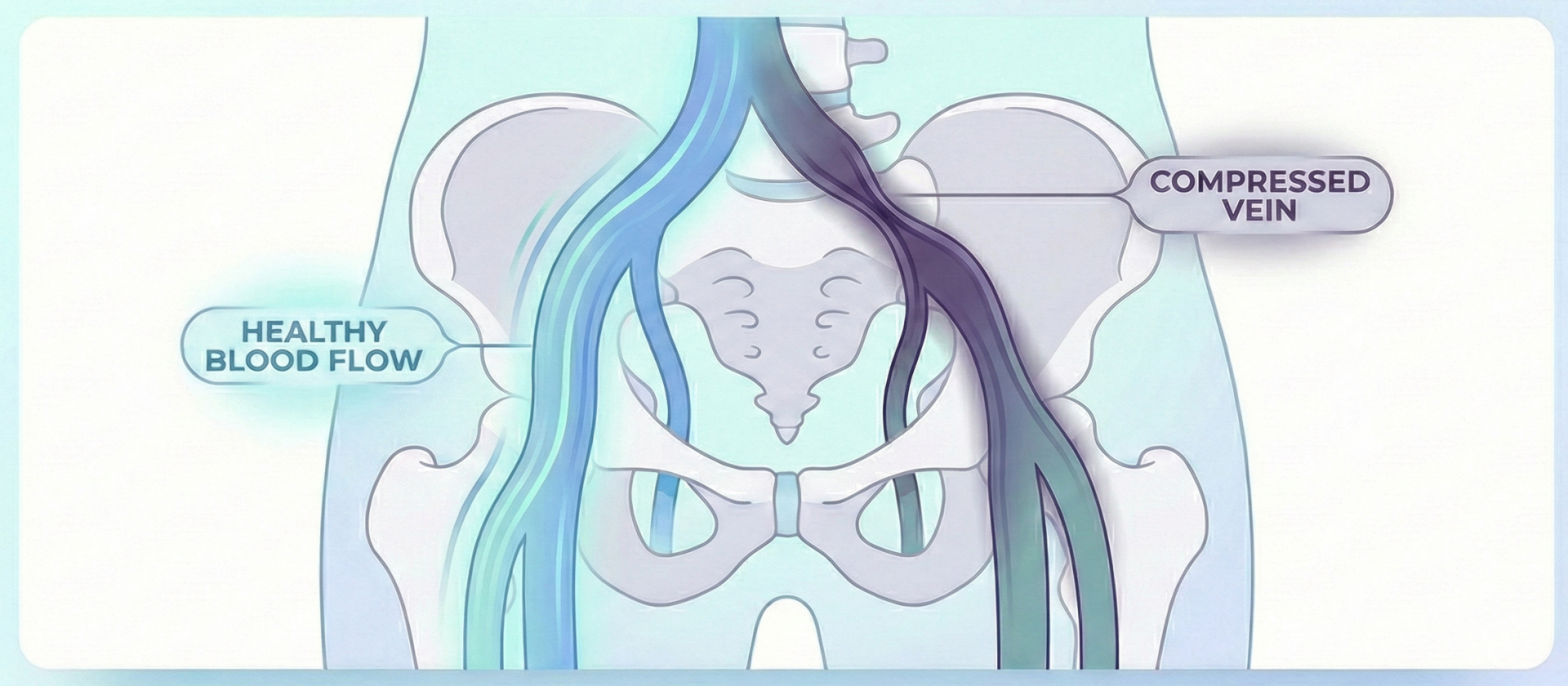
Some patients have a condition called pelvic venous disorders, where large veins in the pelvis become narrowed or compressed. One common type is iliac vein compression (sometimes called May–Thurner syndrome).
When this happens, blood has trouble flowing back to the heart. Instead, it pools in the pelvis and legs.
That backup can cause symptoms like:
- Pelvic pain or heaviness
- Leg swelling or discomfort
- Dizziness or lightheadedness when standing
- Fatigue
- Brain fog
- Fast heart rate
- Urinary symptoms
Many of these symptoms overlap with POTS (postural orthostatic tachycardia syndrome) and orthostatic intolerance.
What Did the New Study Find?
Researchers looked at two large groups of patients who had symptoms like dizziness, fast heart rate, and pelvic pain.
Here’s what they discovered:
Most patients had hidden pelvic vein problems
Over 80% of patients who had POTS-type symptoms were found to also have pelvic vein compression or congestion when carefully tested.
Even more interesting: standard scans like ultrasound, CT, or MRI often missed these vein problems. The most accurate test was an inside-the-vein ultrasound done during a procedure.
Iliac vein stenting for POTS improved symptoms
In a second group of patients, doctors treated the compressed vein by placing a small metal tube called a stent to hold it open.
After iliac vein stenting:
- Most patients reported less dizziness
- Daily activities became easier
- Pelvic pain improved
- Urinary symptoms improved
- Overall quality of life went up
At one year:
- About 70% of patients had meaningful improvement
- Nearly half had major relief of their standing-related symptoms
And importantly, serious complications were rare.
These improvements were seen across many symptoms, not just leg swelling, showing how powerful healthy blood flow can be.
Why Would a Pelvic Vein Affect Your Heart or Brain?
When pelvic veins are compressed:
- Blood pools in the lower body
- Less blood returns to the heart
- The body responds by raising heart rate and stress hormones
This can lead to:
- Racing heart
- Lightheadedness
- Fatigue
- Feeling faint
By opening the vein with a stent, blood flow improves and many symptoms calm down.
Does Everyone Need Iliac Vein Stenting for POTS?
No. This is a critical point.
Many people have mild vein compression and feel totally fine.
Doctors only consider stenting when:
- Symptoms are significant
- Imaging confirms real blockage
- Other causes have been ruled out
- Daily life is being affected
This is why seeing a specialist who understands pelvic venous disease is so important.
The Big Takeaway
If you’ve been told:
- “Your tests are normal,”
- “It’s just anxiety,” or
- “We don’t know why you feel this way,”
this research offers hope.
For some patients, pelvic vein compression is a real, treatable cause of symptoms like dizziness, pelvic pain, and fatigue.
While more studies are still needed, this work shows that iliac vein stenting for POTS-related symptoms and pelvic venous disorders may dramatically improve quality of life for the right patients.